Mictlán
Custom keyboards are a niche with obsessive standards: color accuracy, legends, materials, and consistency across thousands of parts. GMK Mictlán turned that obsession into a collectible world I designed, launched, and ran end to end.
First set, highest stakes
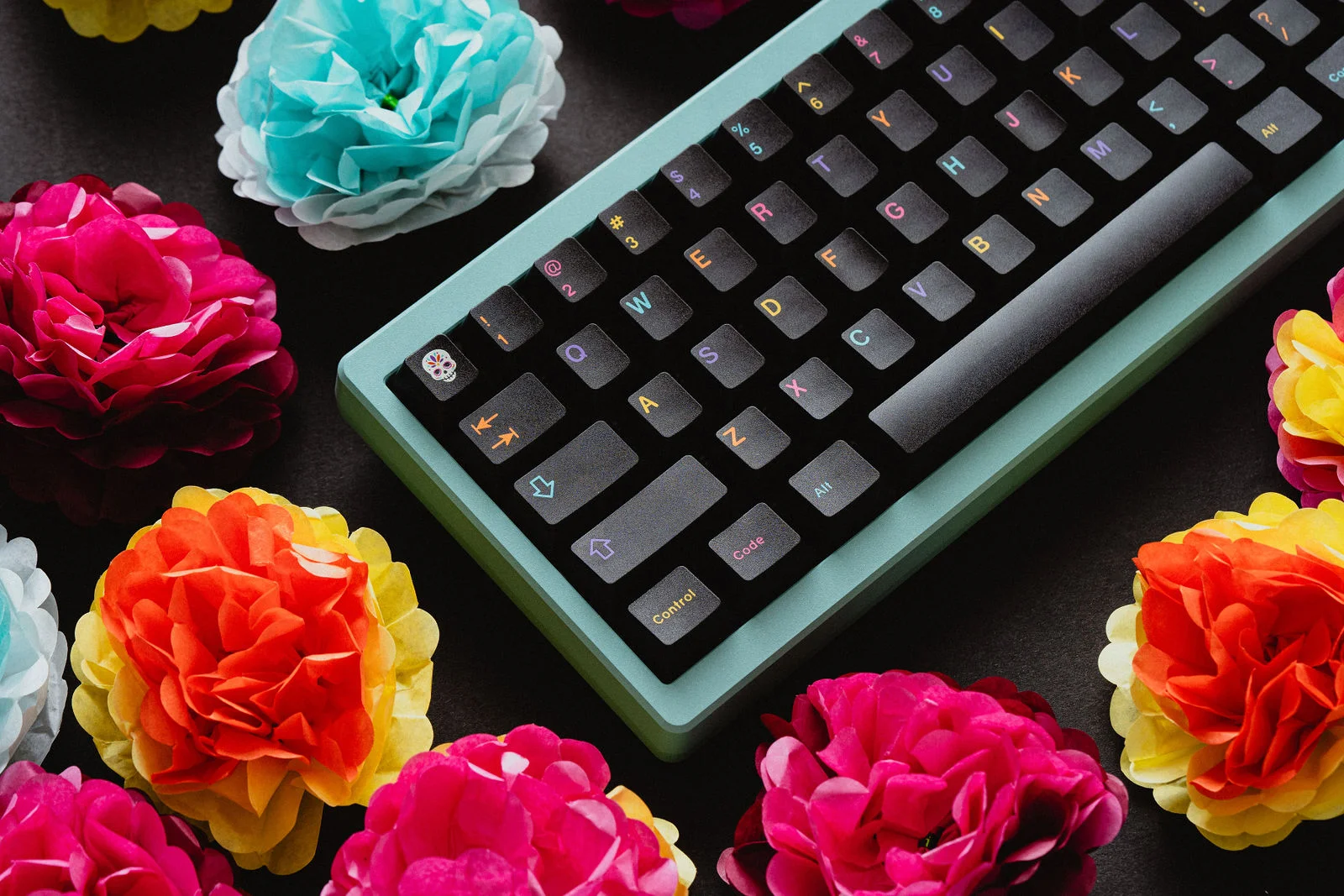
Late 2022. I’d been buying keyboards, studying the scene, noticing what was missing. Cultural sets were rare. Colorways recycled the same safe formulas. I wanted to make something from México. Día de Muertos, real color, real risk. But getting a vendor to host your first set? Almost impossible.
I pitched Novelkeys anyway. They said yes.
Algorithm first, then intuition
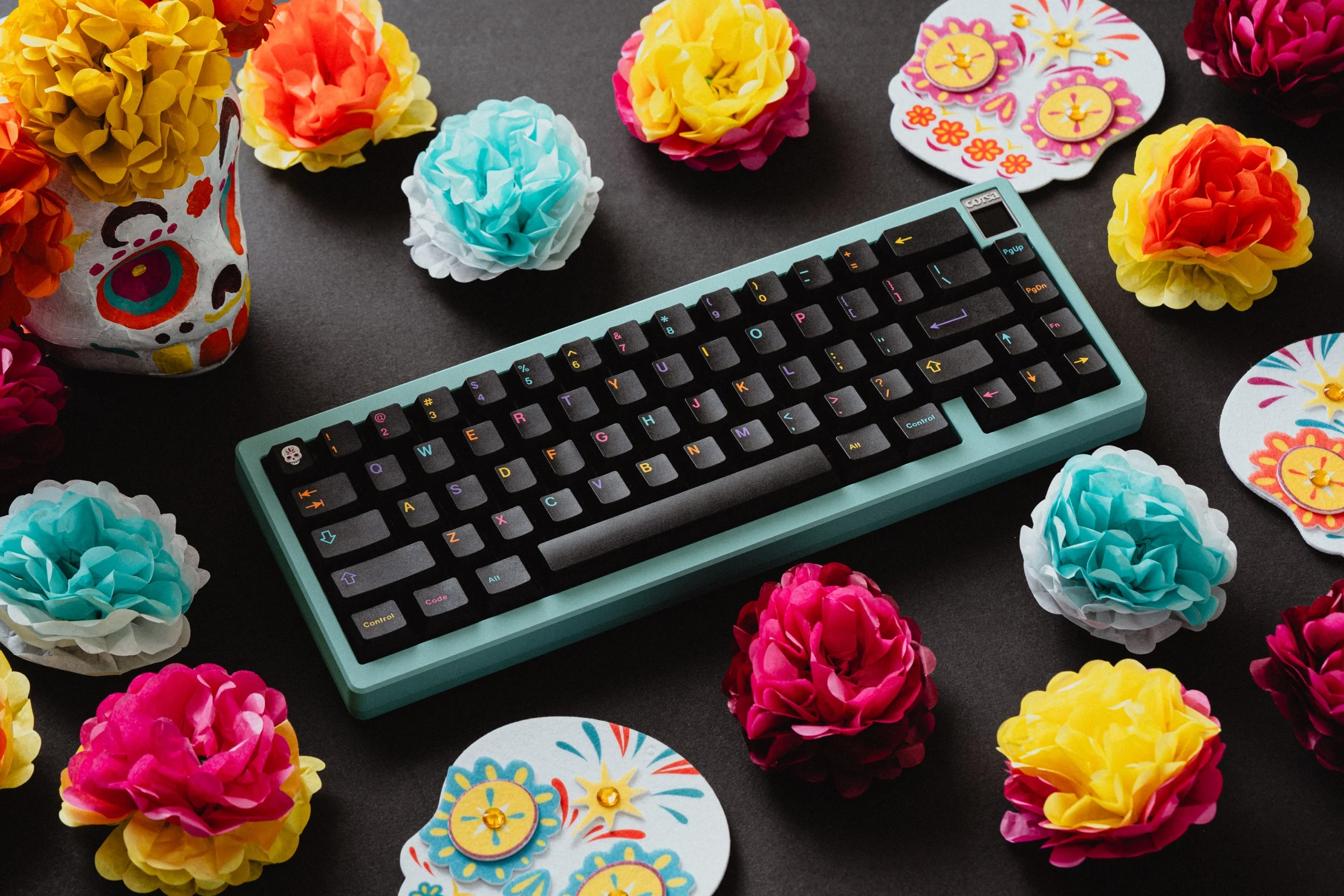
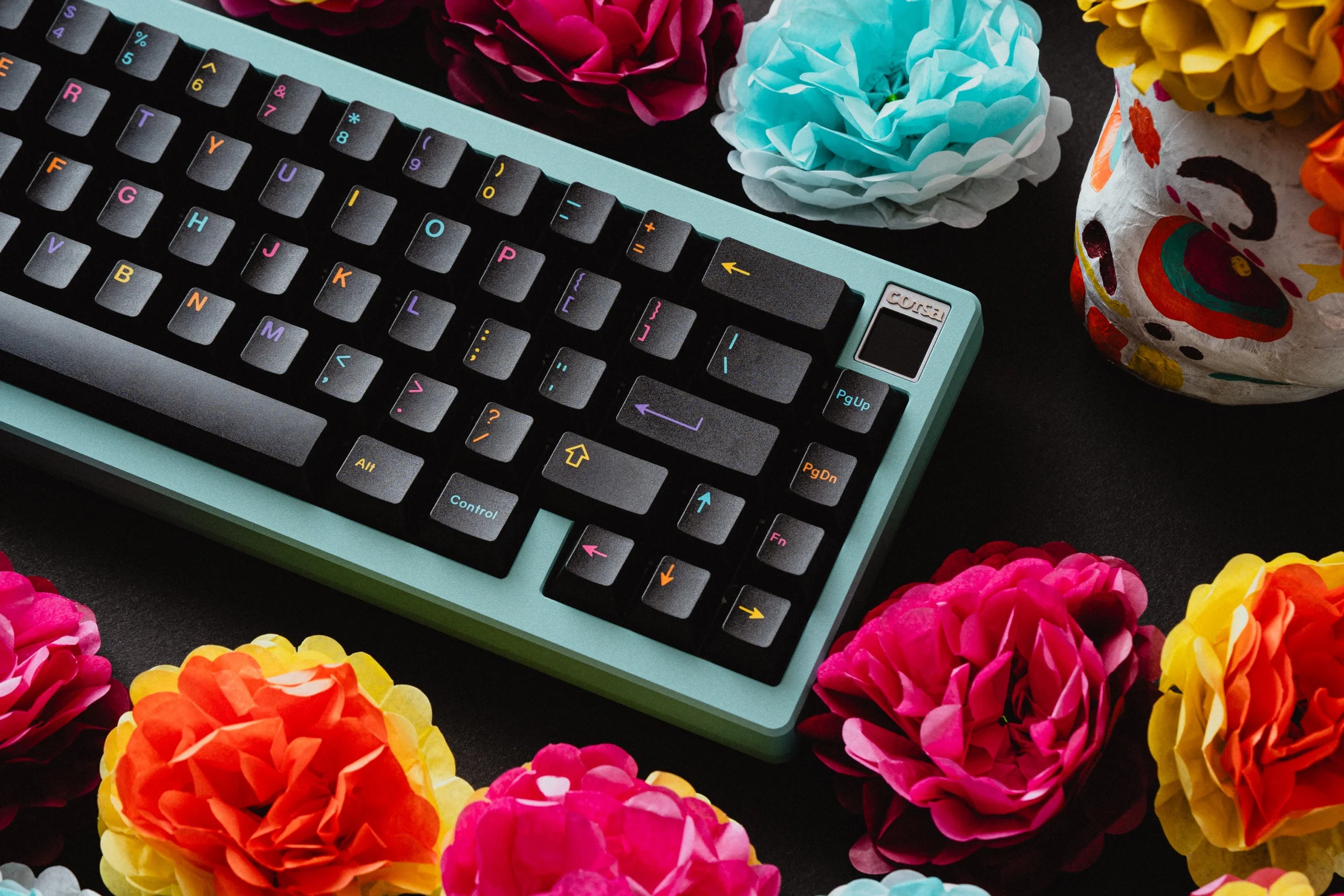
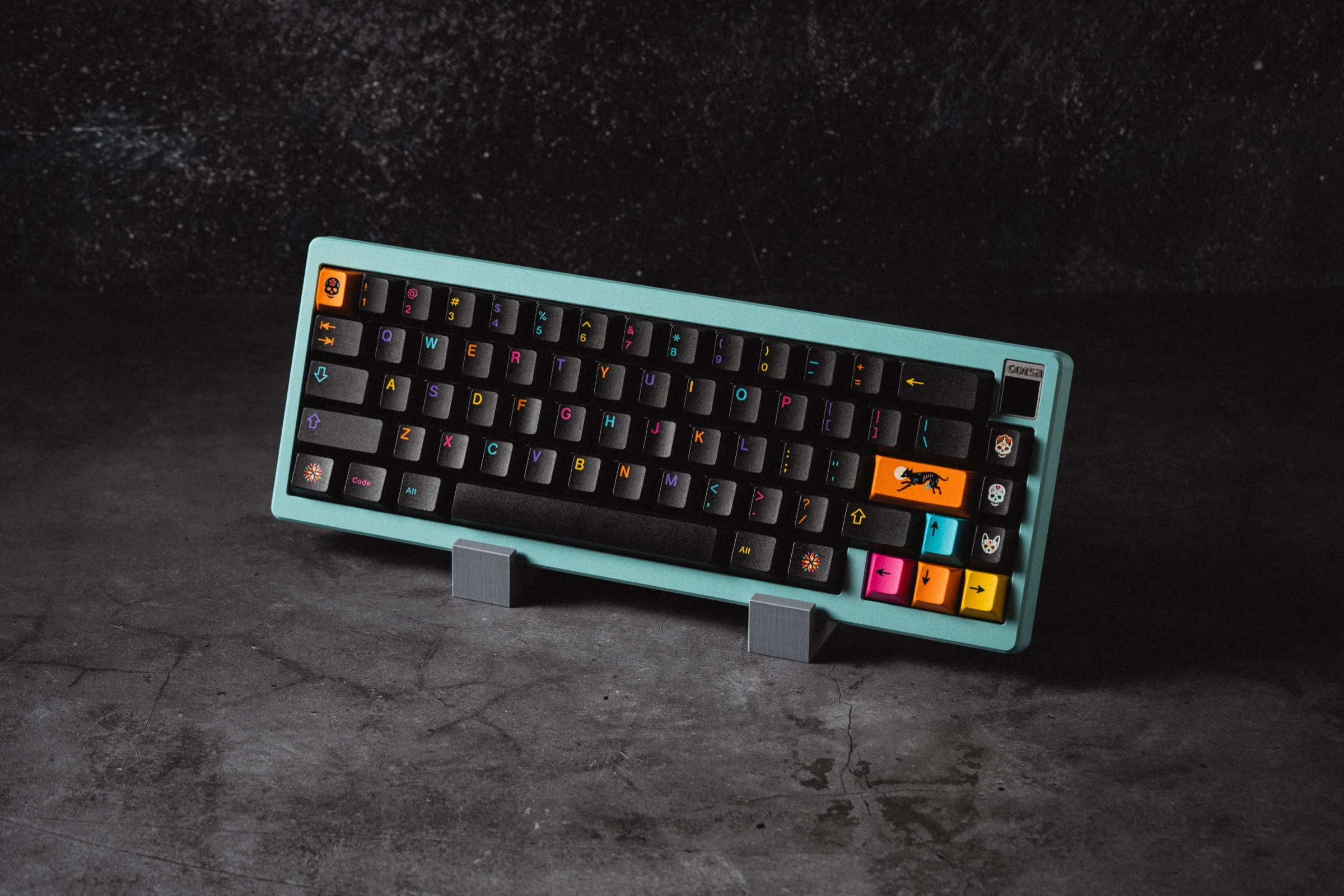
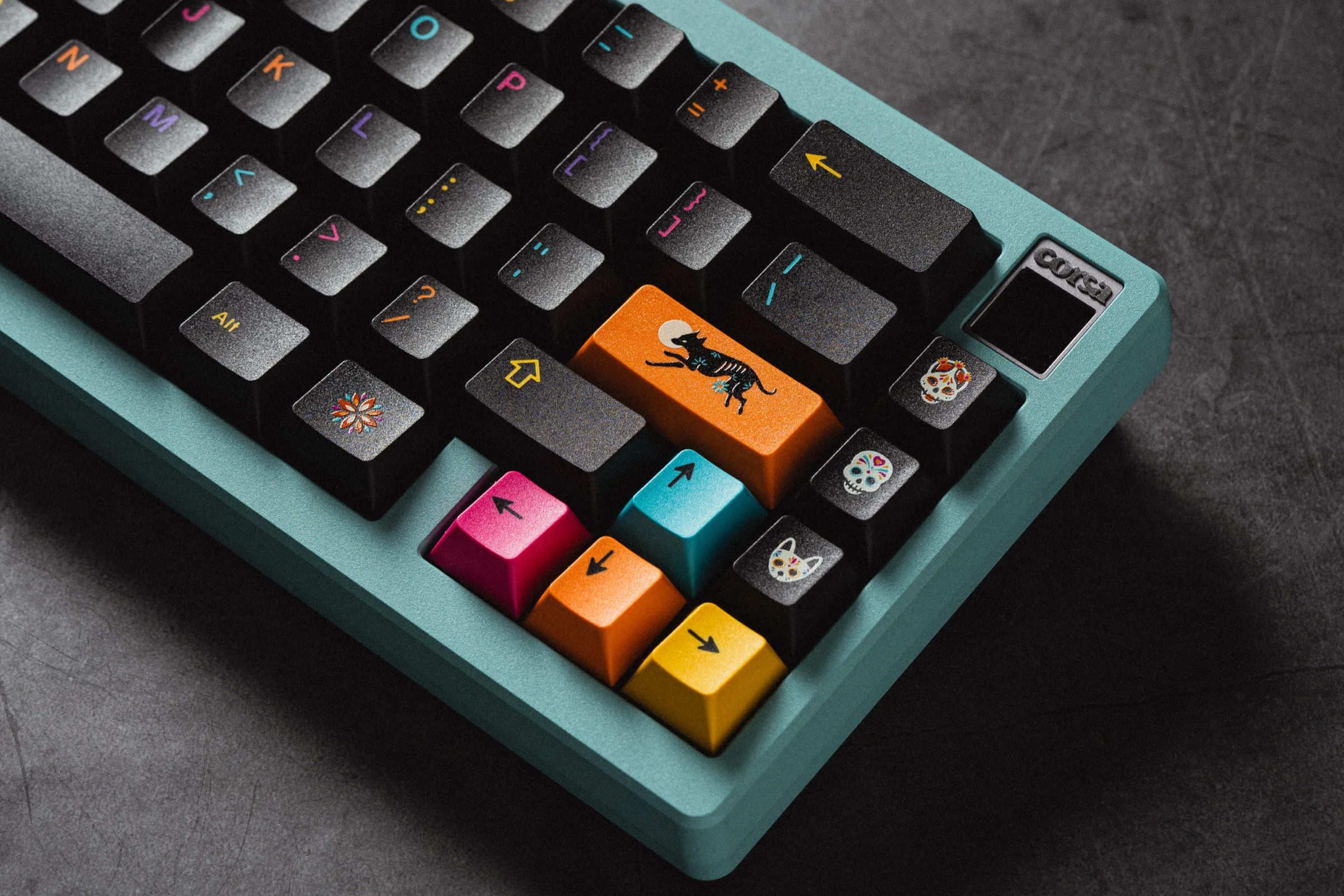
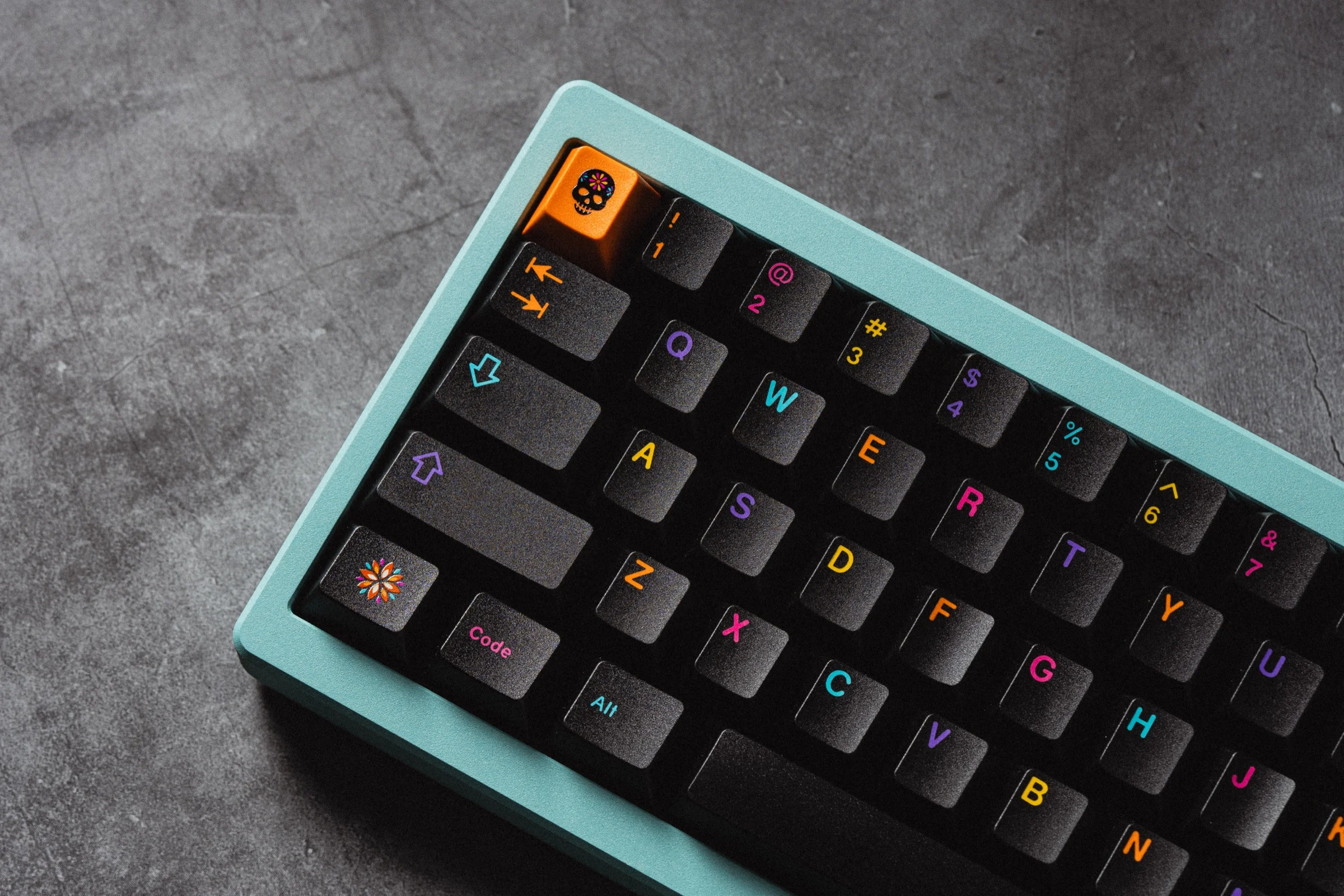
A keyboard is a matrix. Six rows, dozens of columns. I wanted the chaos of papel picado banners, but chaos doesn’t scale. So I built a system: five legend colors (pink, orange, yellow, cyan, purple) on black keycaps, with one rule. No adjacent key can share a color. I wrote a Figma plugin to generate the initial distribution, but algorithms don’t do “feels random.” The output was technically correct and visually dead. So I layered manual curation on top until it felt alive.
That’s how I approach every medium. Rules that scale, then human judgment where computation fails.
Obsession as methodology
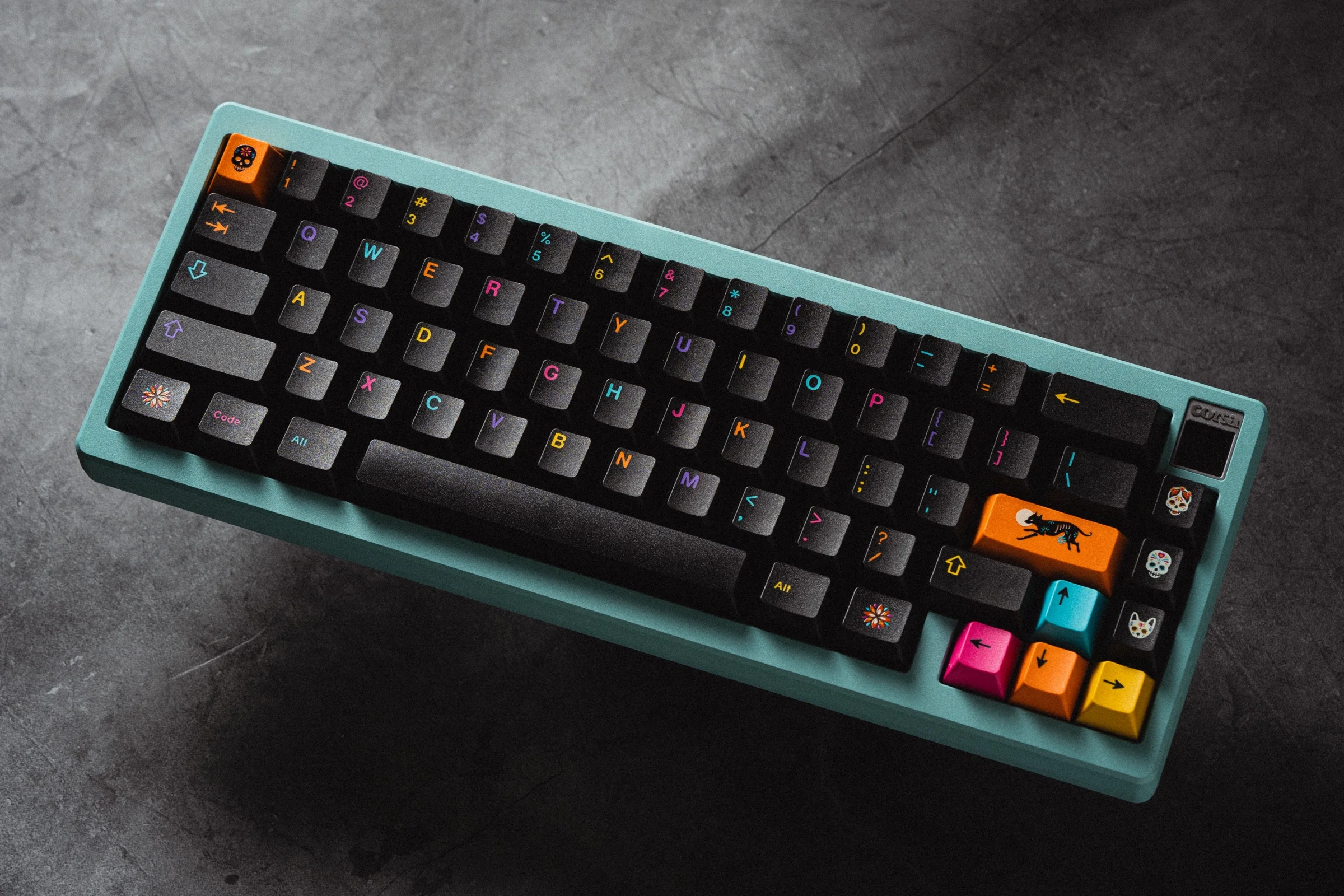
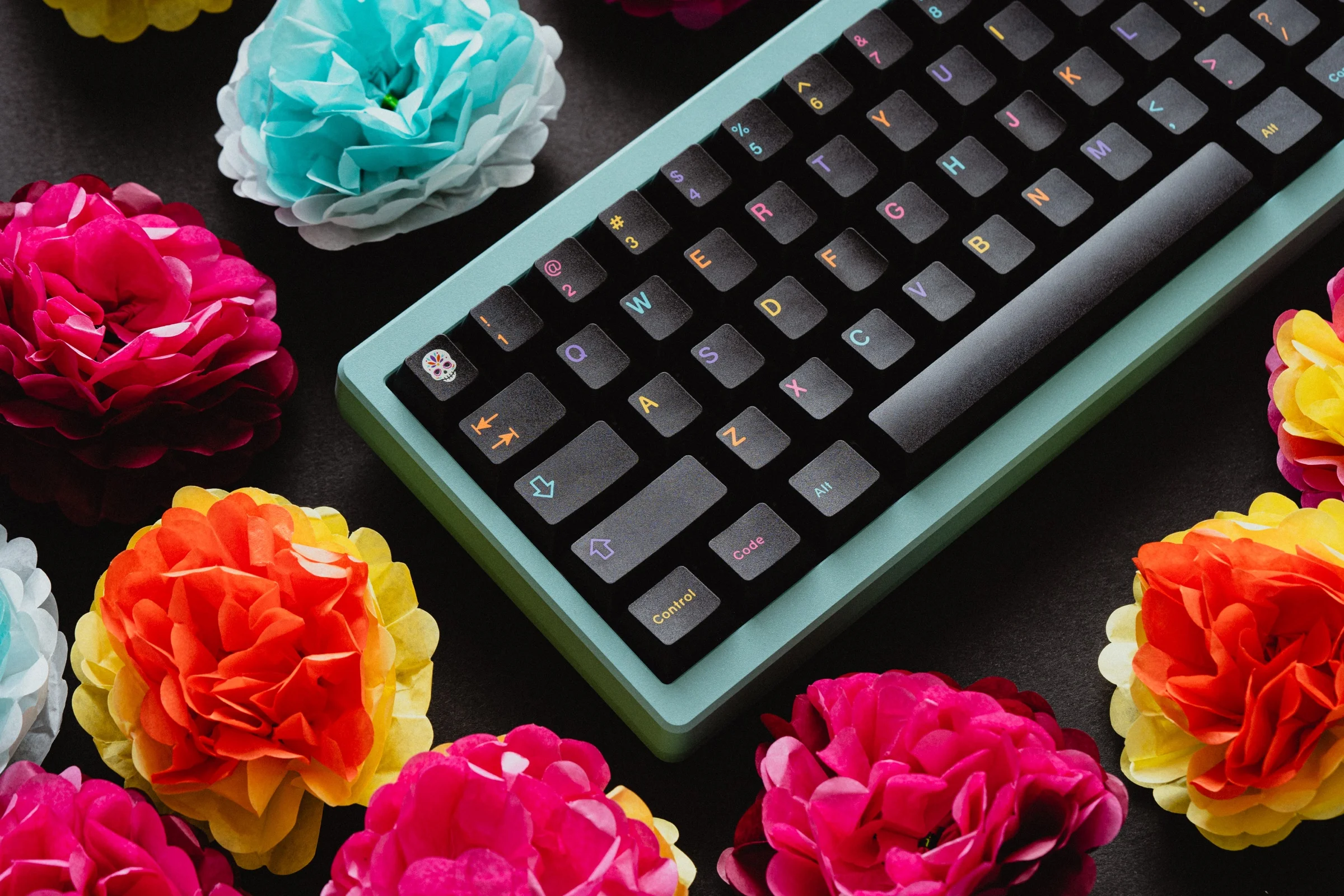
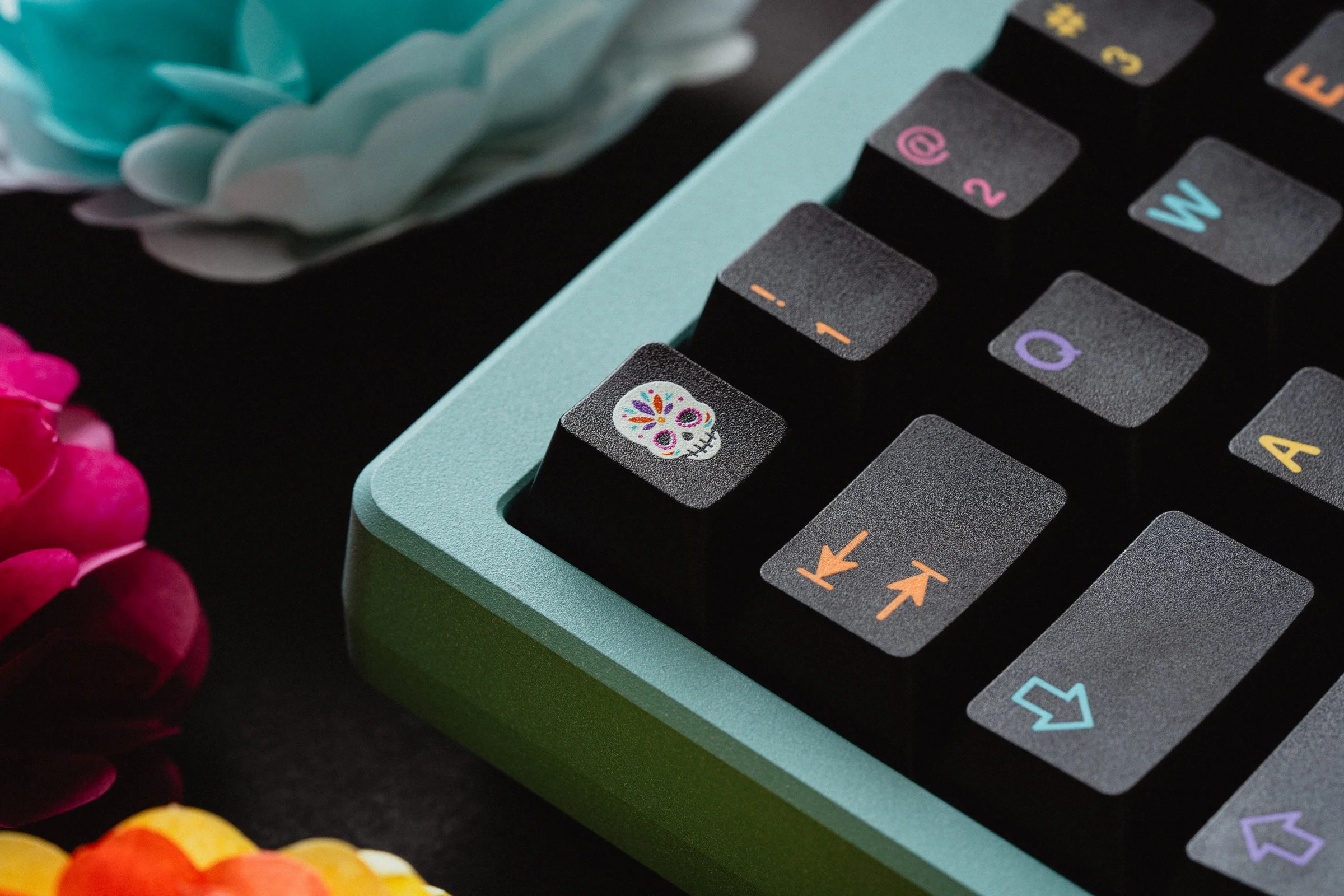
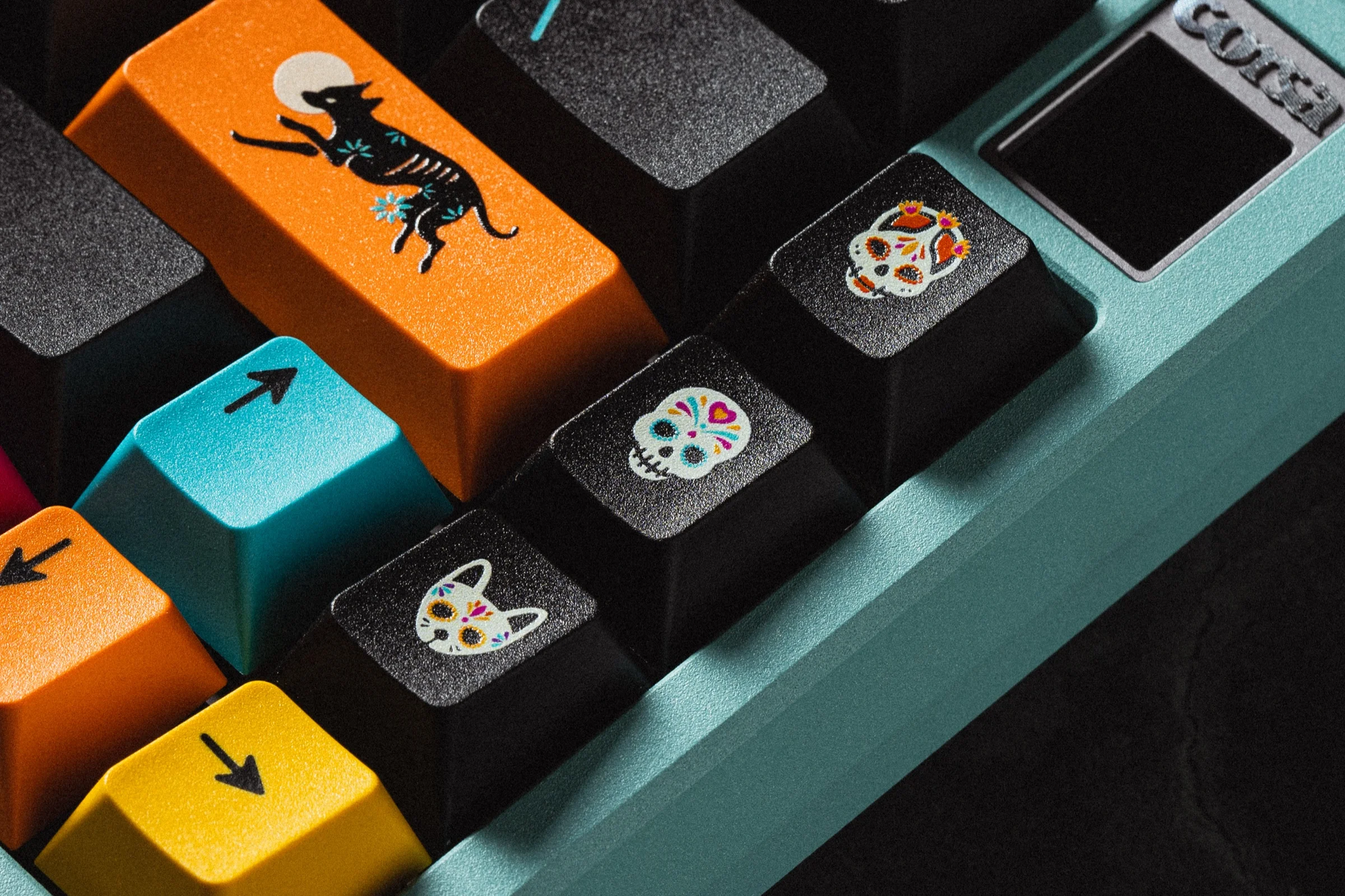
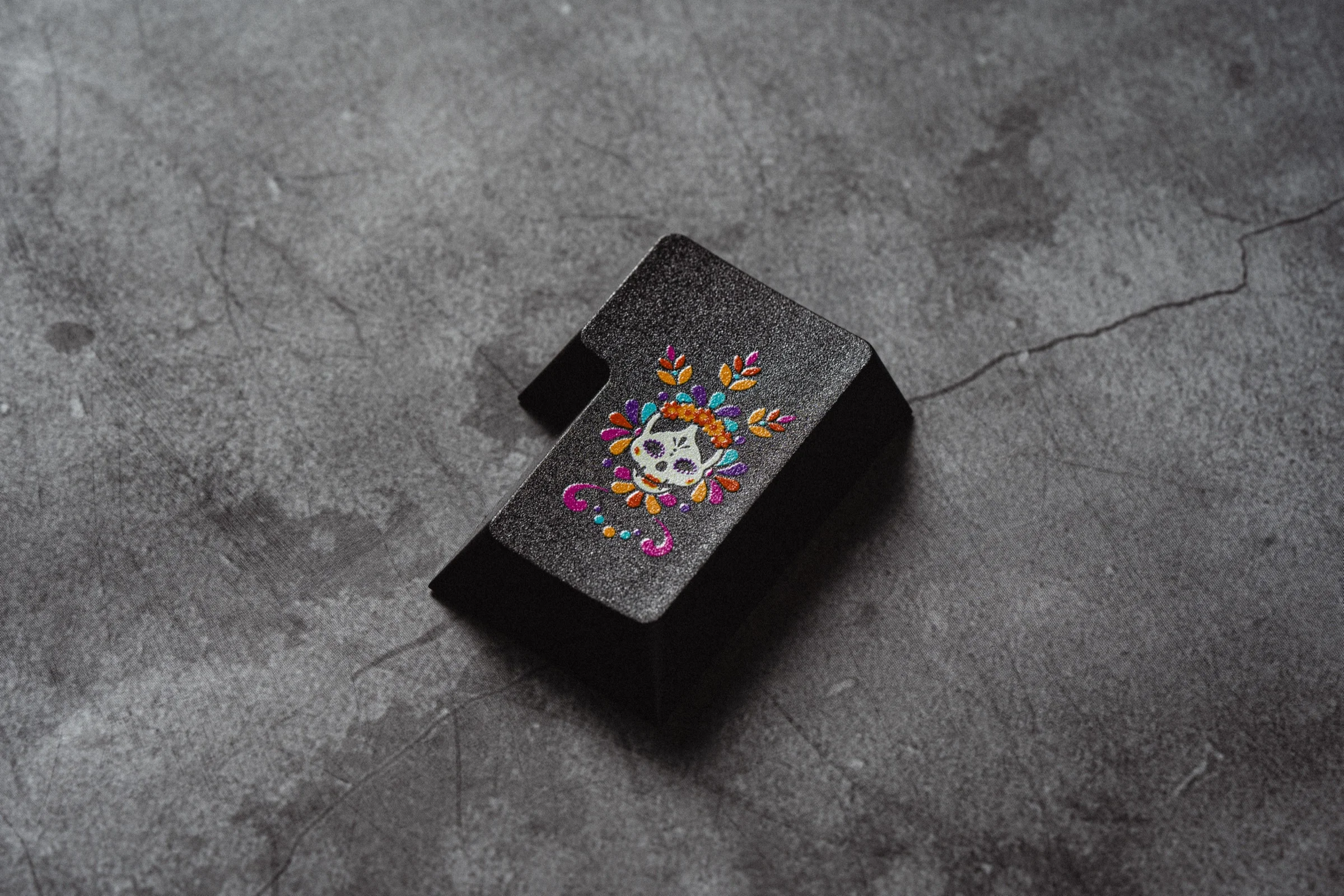
The novelties started as hand-drawn sketches. I redrew every single one from scratch. Pixel-symmetrical, every flourish mirrored perfectly. Same border radius on every decoration. If manufacturing couldn’t support five colors, I needed fallbacks: every skull tested at five, four, three, and two colors. Each skull got a male and female version. Fifteen characters became thirty options.
This wasn’t polish. It was insurance. If any constraint broke (production limits, color costs, user preference) the system would degrade gracefully instead of collapsing.
Constraints protect the system
People asked for green. Green isn’t common in traditional papel picado, but that wasn’t the real reason I said no. Adding a sixth color meant recalculating the entire adjacency map. Every keycap, every row, every column. The system was load-bearing. One color change and the whole thing collapses. I’d rather defend the architecture than chase feature requests.
The scene didn’t owe me anything
I was a nobody. No reputation, no previous sets, no community clout. When the Interest Check went live, the feedback wasn’t all encouragement. “This won’t work.” “You’re new.” “This looks like an AliExpress set.” From people who’d been in the scene for years, directed at someone who hadn’t earned the right to be there yet.
I almost listened. Almost softened the colors, simplified the skulls, played it safe to fit in.
Then it exploded. Artisan makers reached out. Keyboard designers wanted collaborations. By the time it shipped (eight months of production, global distribution, no delays) it was already a classic. The same people who said it wouldn’t work bought the set.
Rebirth pushed further. Custom molds, skull-shaped keys. The bar keeps moving because I keep moving it.
More than a side project
Mictlán wasn’t a side project. It was a product. Concept, manufacturing, vendors, community, global distribution, all of it. Solo.
Whether it’s keycaps or database interfaces. Constraints, extensibility, knowing when to automate and when to curate. That’s the job.
Up next
Rever
Frontline intelligence platform. First Mexican startup backed by Sequoia.